
Updated: May 2026.
What Is Artificial Intelligence? Artificial Intelligence, commonly called AI, is the field of building computer systems that can perform tasks that usually require human intelligence. These tasks may include understanding language, recognizing images, learning from data, making decisions, solving problems, or generating content.
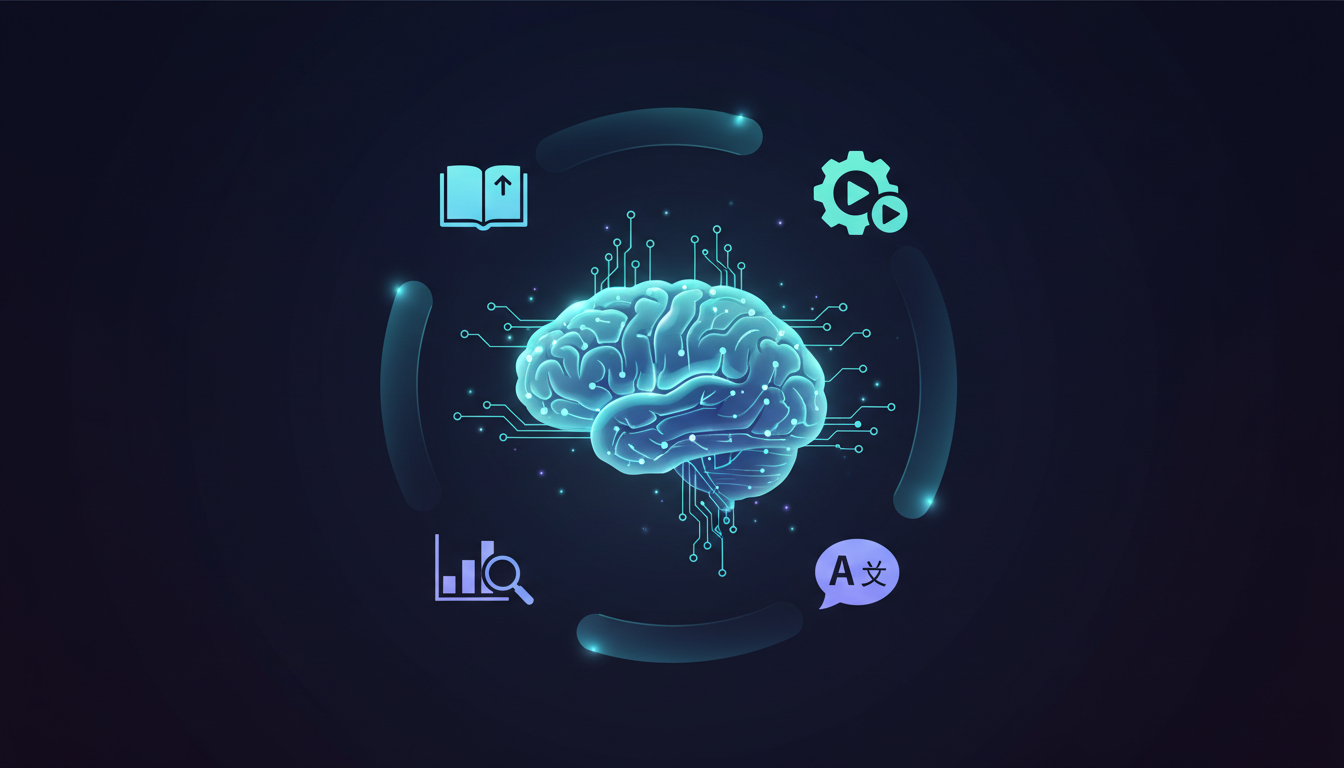
Artificial Intelligence is no longer only a research topic or futuristic idea. Today, AI is used in search engines, chatbots, recommendation systems, healthcare tools, fraud detection, customer support, content creation, and software development.
For beginners, the easiest way to understand AI is this: AI helps machines perform intelligent tasks by using data, rules, algorithms, models, and sometimes human feedback.
Simple definition:
Artificial Intelligence is the field of building computer systems that can perform tasks normally associated with human intelligence.
Who Should Read This?
- Beginners who want to understand AI in simple language
- Students learning AI, machine learning, or data science basics
- Developers who want to start building AI-powered applications
- Professionals exploring generative AI, RAG, and AI agents
- Anyone who wants a practical beginner-friendly explanation of AI
Key Takeaways
- Artificial Intelligence is the broad field of making machines perform intelligent tasks.
- AI can include rule-based systems, machine learning, deep learning, generative AI, and AI agents.
- Machine learning is a subset of AI where systems learn patterns from data.
- Deep learning is a subset of machine learning that uses neural networks.
- AI is already used in everyday tools, business applications, software development, healthcare, finance, and customer support.
- Beginners should first understand AI basics before moving into machine learning, deep learning, RAG, and AI agents.
Table of Contents
- What Is Artificial Intelligence?
- Why Is Artificial Intelligence Important?
- How Does Artificial Intelligence Work?
- Common Examples of Artificial Intelligence
- Types of Artificial Intelligence
- AI vs Machine Learning vs Deep Learning
- Where Does Generative AI Fit?
- Benefits of Artificial Intelligence
- Limitations of Artificial Intelligence
- How Beginners Can Start Learning AI
- FAQ
What Is Artificial Intelligence?
What Is Artificial Intelligence in simple words? Artificial Intelligence is the ability of a computer system to perform tasks that normally require human intelligence.
These tasks can include:
- Understanding natural language
- Recognizing images or objects
- Finding patterns in data
- Making predictions
- Recommending products or content
- Generating text, images, code, or audio
- Automating repetitive decisions
AI does not always mean a robot or a human-like machine. In real life, AI is often a software system, model, API, chatbot, recommendation engine, or automation tool that helps solve a specific problem.
For example, when a shopping website recommends products, when your email filters spam, or when a chatbot answers a question, AI may be working behind the scenes.
Why Is Artificial Intelligence Important?
Artificial Intelligence is important because it helps people and businesses process information faster, automate repetitive work, improve decision-making, and build smarter applications.
Businesses use AI to improve customer support, analyze documents, detect fraud, personalize recommendations, summarize content, and support employees. Developers use AI to build chatbots, copilots, search experiences, document assistants, and AI-powered workflows.
AI is also becoming important for career growth. Many roles in software development, cloud architecture, data analysis, product management, marketing, and operations now benefit from basic AI understanding.
How Does Artificial Intelligence Work?
Artificial Intelligence works by using data, algorithms, models, and rules to produce intelligent behavior. The exact approach depends on the type of AI system being built.
Some AI systems use predefined rules. For example, a simple chatbot may follow fixed decision paths based on user input. Other AI systems use machine learning models that learn patterns from data.
A basic AI workflow may look like this:
- Collect data: The system receives examples, documents, images, text, transactions, or other information.
- Process the data: The data is cleaned, organized, transformed, or converted into a format the model can use.
- Train or use a model: A model learns from the data or uses pre-trained knowledge to generate results.
- Make predictions or responses: The AI system produces an answer, classification, recommendation, or generated output.
- Evaluate and improve: Developers check accuracy, safety, quality, cost, and performance.
In modern AI applications, developers often use AI APIs instead of training large models from scratch. This allows teams to add AI features faster while focusing on application design, security, integration, and user experience.
Related reading: Best AI APIs for Developers in 2026
Common Examples of Artificial Intelligence
AI is already part of many tools we use every day. Some examples are simple, while others are powered by advanced machine learning or deep learning models.
1. Chatbots and Virtual Assistants
Chatbots use AI to answer questions, guide users, summarize information, and help with customer support. Modern chatbots may use large language models to generate natural responses.
2. Recommendation Systems
Streaming platforms, shopping websites, and social media apps use AI to recommend videos, products, posts, or articles based on user behavior and patterns.
3. Fraud Detection
Banks and payment systems use AI to detect unusual activity, suspicious transactions, and possible fraud patterns.
4. Search Engines
Search engines use AI to understand search intent, rank results, detect spam, and provide more relevant answers.
5. Image Recognition
AI can identify objects, faces, scenes, text, or patterns in images. This is used in healthcare, security, retail, manufacturing, and mobile apps.
6. Speech Recognition
AI can convert spoken language into text. This is used in voice assistants, meeting transcription tools, customer support systems, and accessibility tools.
7. Generative AI
Generative AI can create new content such as text, images, code, audio, video, summaries, and structured outputs. This is one of the fastest-growing areas of Artificial Intelligence.
Types of Artificial Intelligence
There are different ways to classify AI. For beginners, the most practical way is to understand AI by capability and use case.
Rule-Based AI
Rule-based AI follows predefined instructions or decision rules. It does not learn from data by itself. These systems are useful when the rules are clear and stable.
Machine Learning AI
Machine learning systems learn from data. Instead of manually writing every rule, developers train models using examples so the system can make predictions or classifications.
Deep Learning AI
Deep learning uses neural networks with multiple layers. It is commonly used for image recognition, speech recognition, natural language processing, and large language models.
Generative AI
Generative AI creates new content. It can generate text, code, images, audio, video, summaries, and structured answers.
AI Agents
AI agents are systems that can reason, use tools, follow instructions, and complete multi-step tasks. They are often connected to APIs, files, databases, or business workflows.
AI vs Machine Learning vs Deep Learning
Many beginners confuse artificial intelligence, machine learning, and deep learning. These terms are related, but they are not the same.
- Artificial Intelligence: The broad field of building intelligent systems.
- Machine Learning: A subset of AI where systems learn from data.
- Deep Learning: A subset of machine learning that uses neural networks.
A simple way to remember it:
AI is the big umbrella.
Machine Learning is inside AI. Deep Learning is inside Machine Learning.
| Topic | Artificial Intelligence | Machine Learning | Deep Learning |
|---|---|---|---|
| Meaning | Broad field of intelligent systems | AI that learns from data | ML using neural networks |
| Scope | Broadest | Subset of AI | Subset of ML |
| Examples | Chatbots, voice assistants, decision systems | Recommendations, fraud detection, forecasting | Image recognition, speech recognition, LLMs |
| Best For | Automation and intelligent behavior | Learning from data and prediction | Complex data like text, images, audio, and video |
Related reading: AI vs Machine Learning vs Deep Learning — Explained Simply
Where Does Generative AI Fit?
Generative AI is a type of AI that creates new content. It can generate text, images, code, audio, video, summaries, and structured outputs.
Many modern generative AI systems are powered by deep learning models. Large language models are trained on large amounts of text and can generate human-like responses.
Examples of generative AI use cases include:
- Writing assistants
- Code generation tools
- Image generation tools
- Document summarization
- Customer support response generation
- AI-powered search and knowledge assistants
Related reading: What AI Can and Cannot Do
Benefits of Artificial Intelligence
Artificial Intelligence can help individuals, developers, and organizations solve problems faster and more efficiently. The benefits depend on how AI is designed, tested, and used.
Faster Decision Support
AI can analyze large amounts of information and provide suggestions, summaries, predictions, or classifications faster than manual review.
Automation of Repetitive Tasks
AI can help automate repetitive work such as data extraction, email classification, document summarization, ticket routing, and content formatting.
Better Personalization
AI can personalize recommendations, learning paths, product suggestions, search results, and customer experiences.
Improved Productivity
Developers and business users can use AI tools to draft content, explain code, generate ideas, summarize documents, and speed up routine work.
New Application Possibilities
AI makes it possible to build smarter applications such as AI copilots, document assistants, voice interfaces, image analysis tools, RAG systems, and AI agents.
Limitations of Artificial Intelligence
AI is powerful, but it is not perfect. Beginners should understand both the strengths and limitations of AI before using it in real applications.
AI Can Be Wrong
AI systems can produce incorrect, incomplete, or misleading answers. This is especially important when using generative AI for research, legal, medical, financial, or business-critical decisions.
AI Depends on Data Quality
If the training data or input data is poor, biased, outdated, or incomplete, the AI output may also be poor.
AI Needs Human Review
AI should support human decision-making, not blindly replace it. Human review is important for accuracy, safety, ethics, and business context.
AI Can Have Privacy and Security Risks
Developers must be careful with sensitive data, customer information, secrets, credentials, and private documents when integrating AI tools or APIs.
AI Costs Can Grow
AI APIs and cloud-based AI services may have usage-based pricing. Developers should monitor token usage, request volume, latency, and cost from the beginning.
How Beginners Can Start Learning AI
If you are new to AI, do not try to learn everything at once. Start with practical concepts and slowly move into deeper topics.
- Learn AI basics: Understand what AI is, where it is used, and what problems it solves.
- Understand machine learning: Learn how models use data to make predictions and classifications.
- Explore deep learning: Learn the basics of neural networks, language models, image recognition, and speech AI.
- Try generative AI tools: Use chatbots, image tools, coding assistants, and productivity tools.
- Learn prompt engineering: Practice writing clear instructions, examples, constraints, and structured prompts.
- Build small projects: Create a chatbot, summarizer, document Q&A app, or AI-powered search feature.
- Study RAG and AI agents: Learn how AI can connect to documents, APIs, tools, and workflows.
For developers, a good next step is to build one small project using an AI API. This helps connect AI theory with real software engineering skills such as APIs, authentication, logging, testing, error handling, and deployment.
Related reading: What Is RAG in AI? and RAG Architecture Explained Simply
Artificial Intelligence for Developers
For software developers, Artificial Intelligence is becoming part of modern application development. Developers do not always need to train models from scratch, but they should understand how to integrate AI safely and effectively.
Important AI skills for developers include:
- Calling AI APIs from backend applications
- Using structured outputs such as JSON
- Building RAG applications with documents and search
- Using embeddings and vector search
- Adding guardrails and validation
- Monitoring cost, latency, and errors
- Protecting user data and secrets
- Testing AI responses for quality and safety
This is why understanding What Is Artificial Intelligence is a strong first step before learning AI application architecture, Azure AI services, RAG, and AI agents.
Official Learning Resources
Beginners can also explore official learning resources to continue building their AI foundation.
- Microsoft Azure AI Fundamentals learning path
- Google Machine Learning Crash Course
- Google AI for Developers
- OpenAI Developer Platform
Final Thoughts
What Is Artificial Intelligence? At its core, AI is about building systems that can perform tasks normally associated with human intelligence. These tasks can include understanding language, recognizing patterns, making decisions, generating content, and helping people work more efficiently.
Artificial Intelligence is a broad field. It includes rule-based systems, machine learning, deep learning, generative AI, and AI agents. The best way to learn AI is to start with the basics, understand real-world examples, and then build small practical projects.
To continue learning, visit the Learn page or explore practical tools on the AI Tools page.
FAQ: What Is Artificial Intelligence?
What is artificial intelligence in simple words?
Artificial intelligence is the ability of a computer system to perform tasks that usually require human intelligence, such as understanding language, recognizing images, making decisions, or solving problems.
What are examples of artificial intelligence?
Common examples of artificial intelligence include chatbots, voice assistants, recommendation systems, fraud detection tools, image recognition, translation apps, search engines, and generative AI tools.
Is AI the same as machine learning?
No. AI is the broader field. Machine learning is a subset of AI where systems learn patterns from data.
Is deep learning the same as AI?
No. Deep learning is a subset of machine learning, and machine learning is a subset of AI. Deep learning is commonly used for complex tasks such as image recognition, speech recognition, and large language models.
Is ChatGPT artificial intelligence?
Yes. ChatGPT is an example of artificial intelligence powered by machine learning and deep learning models.
Can beginners learn artificial intelligence?
Yes. Beginners can start by learning basic AI concepts, then move to machine learning, deep learning, generative AI, RAG, and practical AI tools.
Do developers need to learn AI?
Developers do not need to become AI researchers, but learning AI basics is becoming important. AI knowledge helps developers build smarter applications, integrate AI APIs, design RAG systems, and understand AI-powered software architecture.
What should I learn after artificial intelligence basics?
After AI basics, beginners can learn machine learning fundamentals, deep learning concepts, generative AI, prompt engineering, embeddings, RAG, and AI agents.
Recommended AI Tools & Resources
If you found this article useful, here are some AI tools and resources from AINexArch that can help you work faster and smarter:
- Best AI Writing Tools 2026 — top tools for writing, content, and productivity
- ChatGPT vs Claude 2026 — which AI is better for developers?
- Best Free AI Tools 2026 — powerful AI tools that cost nothing
- Best AI Tools for Content Creators 2026 — complete guide
If you create technical videos, tutorials, or podcast content alongside your development work, ElevenLabs is the best AI voice generator available in 2026. Turn your written content into professional audio in seconds.
👉 Try ElevenLabs Free — Best AI Voice Generator 2026
Disclosure: This article contains affiliate links. If you sign up through my link, I may earn a commission at no extra cost to you.